
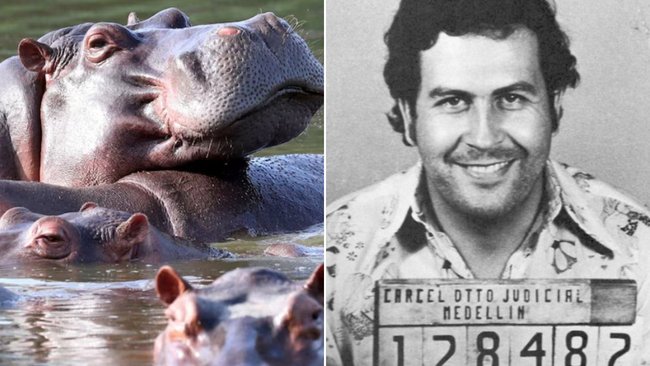
Colombia aproves plan to cull Escobar’s wild hippos
Colombian authorities have approved a controversial plan to reduce the population of free-roaming hippos living in the central region of the country, marking a renewed effort to manage one of the most unusual wildlife situations in the world. The decision involves the controlled culling of dozens of hippos that have spread across rivers and wetlands, posing environmental and safety concerns. Environment Minister Irene Vélez confirmed that the measure was taken after years of unsuccessful attempts to control the animals through non-lethal methods.
According to Vélez, previous strategies such as sterilisation programs and relocation efforts to zoos have proven both costly and ineffective in limiting the rapid population growth of the species. Authorities estimate that up to 80 hippos may be affected in the initial phase of the plan. These animals are considered to pose a risk to local communities, particularly in rural areas where encounters with humans have become more frequent. However, the government has not yet provided a specific timeline for when the culling operations will begin. Vélez defended the decision, stating that urgent action is necessary to protect Colombia’s ecosystems. “If we don’t do this, we will not be able to control the population,” she said. “We have to take this action to preserve our ecosystems.” Her comments reflect growing concern among environmental officials that the hippos’ continued expansion could have long-term ecological consequences. Colombia holds a unique distinction as the only country outside Africa with a wild population of hippos.
The animals trace their origins back to the 1980s, when they were illegally imported by drug lord Pablo Escobar for his private estate, Hacienda Nápoles. The ranch, located in the Magdalena River valley, once served as Escobar’s personal zoo and included a variety of exotic animals alongside the hippos. Following Escobar’s death and the confiscation of his property by the Colombian state, the estate was transformed into a public theme park. Today, it features recreational attractions such as swimming pools, water slides, and a zoo, while also becoming an unexpected habitat for the descendants of Escobar’s original animals. A study by Colombia’s National University estimated that the hippo population had grown to approximately 170 individuals by 2022. Since then, reports suggest that the animals have continued to spread beyond their original territory, with sightings recorded more than 100 kilometers north of Hacienda Nápoles. This expansion has raised alarm among environmental agencies and local communities.
Officials warn that the hippos pose multiple risks. Their large size and unpredictable behavior can endanger farmers and villagers who encounter them near rivers and agricultural land. In addition, the animals are believed to compete with native species, including river manatees, for food and habitat, potentially disrupting local biodiversity. Despite these concerns, the hippos have also become a source of tourism and local income. Residents near Hacienda Nápoles have developed hippo-watching tours and sell themed souvenirs, turning the animals into an unusual attraction that draws visitors from across the country. This dual role—as both environmental threat and economic asset—has made the debate over their future particularly complex.
Animal welfare groups in Colombia have strongly opposed the culling plan, arguing that the hippos should not be killed and that alternative solutions should be pursued. Critics also warn that resorting to lethal control measures could set a troubling precedent in a country that has experienced decades of internal conflict. Over the past decade, successive Colombian governments have attempted to manage the population through sterilisation programs. However, these efforts have had limited success due to the difficulty and high cost of capturing such large and potentially dangerous animals in the wild.
Relocation to Africa has also been considered unfeasible, given the hippos’ genetic isolation and the risk of disease transmission. As the debate continues, Colombia faces a difficult balancing act between environmental protection, public safety, and animal welfare. The future of the country’s unusual hippo population remains uncertain, with the government now leaning toward more drastic measures after years of limited progress.