Maria Corina Machado’s european tour fuels debate over Venezuela’s future
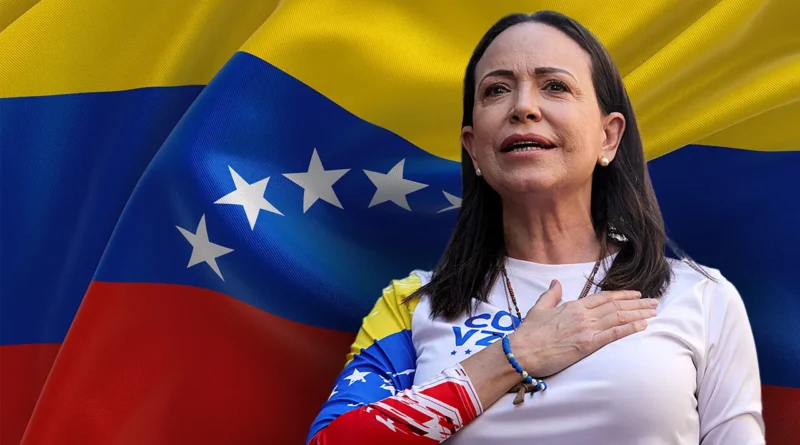
Venezuelan opposition leader Maria Corina Machado has drawn significant political attention during her recent visit to Spain, highlighting both international alliances and deep ideological divides. While her economic views align closely with Spain’s conservative opposition, her stance on social issues and political strategy has exposed clear differences and sparked debate among analysts.
Machado’s visit was marked by a controversial decision to decline a meeting with Spain’s Prime Minister Pedro Sanchez. The Spanish leader, who heads a left-wing coalition government, had expressed willingness to meet her. However, Machado rejected the invitation, citing the timing of a progressive summit hosted by Sanchez in Barcelona as inappropriate.
Speaking at an event in Madrid, Machado explained her reasoning, stating that recent developments surrounding the Barcelona meeting confirmed her belief that such an encounter was “not advisable.” This decision quickly became a focal point of her visit, as it underscored her clear political positioning and strategic alignment.
Instead of engaging with the Spanish government, Machado focused her efforts on strengthening ties with Spain’s conservative and far-right political forces. She held a series of meetings with key figures from the People’s Party (PP), including its leader Alberto Nunez Feijoo, as well as with Santiago Abascal, leader of the far-right Vox party. She also met Isabel Diaz Ayuso, a prominent conservative figure and one of Sanchez’s most vocal critics.
During her stay in Madrid, Machado received a warm reception from conservative leaders and Venezuelan expatriates. She was honored with symbolic gestures, including receiving the city’s Golden Key from Mayor Jose Luis Martinez-Almeida and a medal from regional authorities. These events reinforced her growing ties with Spain’s right-wing political establishment and highlighted her influence among the Venezuelan diaspora.
Despite the political support she received, analysts note that Machado’s relationship with Spain’s conservative leaders is not without differences. While she shares common ground with the PP on economic policies—particularly regarding free-market reforms—she diverges on several social issues, including abortion and broader cultural policies.
Machado, often described as a liberal conservative and an admirer of Margaret Thatcher, has attempted to reposition herself politically in recent years. During Venezuela’s 2024 presidential campaign, she shifted closer to the political center in an effort to appeal to moderate voters. However, she continues to lead a fragmented opposition movement that includes both conservative and liberal factions.
This contrasts sharply with the structure of Spain’s People’s Party, which operates as a well-organized national political force. According to experts, this difference in organization highlights a broader gap between the Venezuelan opposition and established European political parties. Machado’s movement is often described as decentralized and less cohesive, making it more challenging to project unified leadership on the international stage.
Criticism of Machado’s visit has also emerged from Spanish officials. Foreign Minister Jose Manuel Albares criticized her for engaging exclusively with right-wing and far-right groups while avoiding contact with the government. He argued that such an approach undermines her position as a representative of all Venezuelans and portrays her more as an ideological figure than a national leader.
Analysts have also questioned her decision to avoid meeting Sanchez, suggesting that it may not align with the expectations of a potential national leader. Engaging with a wide range of political actors, regardless of ideological differences, is often seen as essential for building international credibility and diplomatic relationships.
Maria Corina Machado visit comes at a crucial time for Venezuela, as the country continues to face political uncertainty and calls for democratic reforms. She has positioned herself as a central figure in the opposition, advocating for economic restructuring, institutional reform, and a transition toward democratic governance.
While her strategy of aligning with conservative allies abroad may strengthen her support among certain groups, it also risks deepening political polarization both internationally and within Venezuela. The mixed reactions to her visit in Spain reflect the broader challenges she faces as she seeks to lead a divided opposition and gain recognition as a future national leader.